

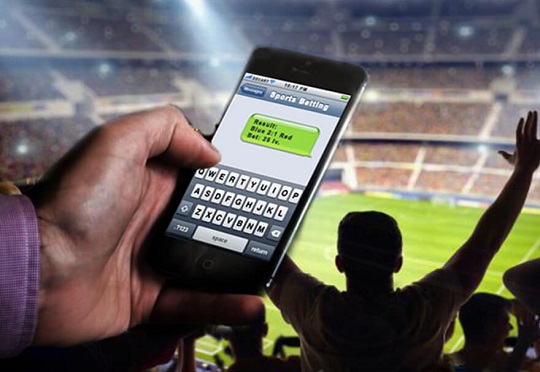
The technology used for betting may have advanced far quicker than we can truly understand it, and it may be time to take notice.
Those who really know me know that I am quite a liberal person, and normally I wouldn’t need to preface any arguments with that disclaimer, but I felt it was appropriate in this case. I have no strong opinions on gambling nor am I a gambler. I only came to be interested in this industry because I am a former sportsman. In fact, one could say that basketball opened most of the doors in my life; it allowed me to afford an education in the US, to travel around the world, and meet all the different people who’ve impacted my life. Sports has always been a social catalyst, something young people dream about, and an escape for adults weary of the everyday troubles.
I say all of this to say that these words are not about morality or self-righteousness, but merely about balance and its importance to any society’s well-being.
First, I’d like to define what is understood as online sports gambling, and how it works. As Forbes puts it, online sports betting is “a digital system that allows bettors to establish and fund betting accounts and make wagers with a couple of clicks on their computer or mobile phone.” In other words, it is a mini personalized casino for every single person who has access to internet.
However, unlike the traditional places of “vice” like nightclubs or casinos, this establishment follows you everywhere and spares you the residual shame associated with being a frequent visitor. In fact, this casino is with you all day, every single day, even sending you notifications when you have the nerve to go some time without visiting it. In some sense, online sports betting has completely knocked over the mental guardrails that existed between us and one of our most addictive impulsions.
The Covid pandemic has forever altered the way a lot of us live. One of the things it accelerated was technological changes through the adoption of platforms like Zoom©.With those changes also came the optimization of gambling apps and websites. The pandemic was an opportune moment to capitalize on people spending so much time at home and on their electronic devices. This moment truly constituted the paradigm shift in the gambling world: casinos and betting houses no longer had to worry about getting customers through the door, instead they would just invite themselves into the discretion and comfort of your home.
From Senegal, to Cameroon to South Africa, the online betting websites are multiplying, each vying to make it as easy as possible to place wagers. According to GamingLab, there are 60 million Nigerians aged 18-40 who are active sports bettors and spend an average of 15 US dollars per day with a significant part of that action happening online. That is just a staggering amount of money when you consider the disposable income for most young adults in Sub-Saharan Africa.
It’s one thing to walk through the doors of an establishment and spend not-so-disposable income, but it’s an entirely other thing to do it anonymously in just a few clicks of your thumb. As I noted before, the digitalization of casinos has removed most of the (perhaps needed) stigma associated with frequent gambling, and it has become increasingly normal for a lot of people to check their betting apps first when they wake up.
Except, there are severe consequences to the erasure of those guardrails. The first and most immediate consequence would be the impact on the personal finances of bettors. Excessive gambling typically hurts people who can afford it less, those who are not very knowledgeable about sports betting, but get started just for the thrill and/or the promise of a quick payday.
Many are wagering part of or their entire salaries in the hopes of turning their fortune, or sometimes just to pay off debts from previous gambling losses. What is also helping this trend is that seemingly every sports broadcast and stadium is littered with gambling advertisement featuring recognizable personalities like Neymar inviting you to download their preferred betting application. Similar to the social media giants like Instagram or Tik-Tok, these apps are designed to keep you on the platform for as much time as humanly possible, but this time the price to pay is hard-cold cash instead of just your attention.
Losing money one can’t afford to lose can have a devastating mental effect in addition to the financial hit, especially if it was lost on a bet. In the most extreme of cases, degenerate gamblers have gone on to lose their employment and destroyed their relationships with friends and family.
Online sports gambling is also slowly perverting the relationship fans have with athletes. Take what happened last month to an NBA player named Bradley Beal for example. After a loss to the Orlando Magic, an angry fan confronted Mr. Beal on his way to the locker room because according to the fan, the Washington Wizards’ star had just cost him $1300. The fan swore at the athlete, and the altercation turned physical. A police investigation is currently under way and the 10 year NBA veteran is facing a possible misdemeanor charge in Central Florida according to the local authorities. This is, sadly, not the first nor the last time such an incident has occurred. If anything, they are becoming the norm; especially online, where fans routinely harass and abuse athletes.
I would also be remiss if I didn’t mention that while this is a billion dollars industry in Africa, it doesn’t create any long lasting greater economic benefit as it is increasingly reliant on automated technology and does not create jobs for the population it relies on to keep betting.
I would never suggest prohibiting any lawful activity that consenting adults take part in, but the current situation brings about a few questions. Should we start looking at online sport gambling in a different view? Here is an activity designed to be highly addictive where participants can lose control and hurt themselves financially, mentally, and even physically. Why should we wait for the problem to become worse before we as society do what our predecessors did when they regulated cigarettes and alcohol? Why should gambling be any different?
By Dema SANE