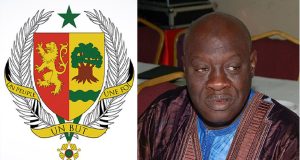


The Senegalese banker, Abdoulaye Fall, was vice president in charge of finance and institutional services at the ECOWAS Bank for Investment and Development (EBID). He was a candidate to lead the institution at the end of the mandate of the Ghanaian, George Nana Agyekum Donkor, in 2020. The candidacy of the Senegalese had been favourably received in banking circles and within EBID, but Ghana had succeeded, after many twists and turns, in getting the outgoing president reappointed, even though he was appointed for a non-renewable term.
Abdoulaye Fall, feeling betrayed and denouncing this breach of the rules, left his post. Senegal did not want to make a fuss and appointed Mabouba Diagne to replace the resigning member. It should be noted that this was against a formal commitment, unanimously signed by the members of the Board of Governors of EBID, during their Extraordinary General Assembly held on 13 January 2020 in Lome (Togo).Thus, the Board of Governors stipulated that « in 2024, the Republic of Senegal will be the only country to present a candidate for the presidency of the Bank. The candidate thus nominated by the Republic of Senegal must meet the relevant criteria set by the Board of Governors, which will appoint him/her for a non-renewable four (4) year term (2024-2028) ».
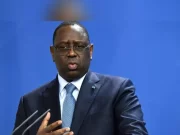
With one year to go, Ghana, supported in particular by Côte d’Ivoire and Nigeria, still intends to keep George Donkor at the head of EBID. These three countries are the main shareholders of EBID and the vote within the Board of Governors is done in proportion to the position of each in their shares of the institution. Ghana is likely to retain the presidency. Côte d’Ivoire and Nigeria have an interest in supporting Ghana so that they can, in a three-way arrangement, redistribute the other positions of Vice President and Secretary General of the Bank. President Macky Sall had sent a letter to his ECOWAS peers in which he invited them to respect the 2020 agreement.
Senegal is supported by Togo and Benin. But to shore up their plan, Ghana, Nigeria and Côte d’Ivoire are hoping to win Benin over to their cause. To do this, these countries are considering creating another position of vice-president which will be offered to Benin, especially as Côte d’Ivoire has made no secret of its desire to take the post occupied by Mabouba Diagne. The Board of Governors finally decided on the possibility of George Donkor‘s reappointment by means of a vote. President Macky Sall does not seem to want to swallow a new viper and shows a firm determination to preserve the interests of his country. To do so, he is said to have planned to refer to his ECOWAS peers. In a way, history seems to be repeating itself.
Senegal is experiencing the same situation as during the epic battle to regain control of the presidency of the WAEMUCommission. President Abdoulaye Wade, who in 2004 did not want to reappoint his compatriot Moussa Touré, gave up the post reserved for Senegal in favour of the Malian Soumaïla Cissé. Cheikh Hadjibou Soumaré only regained the post in 2011 and resigned in December 2016.
Niger took advantage of this to assert its desire to occupy the chair. President Issoufou eventually got it. Niger’s former finance minister, Abdallah Boureima, was elected to the post because Senegal had insisted on respecting a commitment signed in July 2011 by President Wade, in which he promised the post to Niger.President Issoufou took out this commitment from President Wade, and Macky Sall relented and endorsed the commitment made by his predecessor. The Presidency of the Republic of Senegal then issued a communiqué stressing that « in a spirit of solidarity and fraternity, and with a view to ensuring the continued smooth functioning of the Union, President Macky Sall has responded favourably to the request of his peers to award the presidency of the WAEMUCommission to Niger until 2021, i.e. for a single term”.
« You Are Only Ever Betrayed by Your Own! »
Over the past twenty years, Senegal has been left with a bitter taste of certain diplomatic setbacks due to the underhanded hostility of its neighbours who have deprived us of their votes. The most emblematic case is the failure of AbdoulayeBathily‘s candidacy for the presidency of the African Union (AU) Commission to replace South Africa’s NkosazanaDlamini-Zuma. Professor Bathily, who was still the UN Secretary General’s Special Representative for Central Africa, may not have been thinking of running for the AU presidency. In any case, we met by chance at the Gaweye Hotel in Niamey. I had just finished a telephone conversation with my friend Mathata Thsedu, a Johannesburg media owner, former chairman of the African Publishers Forum (Taef) and very influential in South African power circles. Mathata told me that Mrs Zuma would not be standing for re-election as head of the AU Commission.
Prof Bathily invited me to discuss the situation in Senegal and Africa, as well as his mission on behalf of UN Secretary General Ban Ki Moon. The idea came to me to suggest that he be considered as a replacement for Mrs Zuma, especially as I thought he had an excellent profile for the job. He seemed very interested, but said he needed support from the Senegalese authorities first. I made it my business to speak to President Sall as soon as I returned to Dakar. The Senegalese Head of State was in favour of this project and received Prof. Bathily. The diplomatic machine was launched. Thus, Senegal sent more than 42 diplomatic missions across Africa to advocate for Professor Bathily‘s candidacy.
He had also asked and obtained ECOWAS support for his candidate. At the time of the vote, the defection of some of Senegal’s ‘friends’ was noted and this allowed the election of Chad’s Moussa Faki Mahamat. This situation of friendship with Chad should not have been surprising, as it had already been observed in 2014 that Senegal’s neighbours had participated, along with Idriss Déby‘s Chad, in the establishment of the G5 Sahel by choosing to exclude Senegal from this security project. I must say that I was disappointed and outraged by malicious claims that President Sall had not sufficiently endorsed the candidacy of Abdoulaye Bathily.
The votes of African countries were also missing for Eva Marie Coll Seck, nominated by President Abdoulaye Wade in May 2003 to run for the post of Director-General of the World Health Organisation (WHO). The Korean Jong Wook Lee was elected. Eva Marie Coll Seck was rejected for the same reasons in 2017, this time presented by President Macky Sallfor the post of Executive Director of the United Nations Population Fund (UNFPA). Natalia Kanem from Panama had succeeded in replacing Babatunde Osotimehin from Nigeria, who died. Once again, the votes of some African countries, notably from the ECOWAS region, were not counted in favour of Eva Marie Coll Seck.
However, Senegal has always adhered strictly to decisions to support any candidate presented in the name of the African Union, in any international position. This is why President Sall had to decline offers to present a Senegalese candidate for the post of Director-General of the International Labour Office (ILO). This undoubtedly led to the appointment of the Togolese Gilbert F. Houngbo in October 2022 as head of the ILO.
Senegalese Are Never Ridiculous in Their Positions: the Proof with Macky Sall as Chairman of the African Union
In diplomatic circles, there is a common saying that ‘Senegal is not an African country but a country in Africa’. This brings smiles, but would seem to be a good truth, in an environment of military dictatorships, coup plotters and presidents for life in Africa. However, this perception or posture could lead to jealousy and make Senegal and Senegalese people unloved. Moreover, the record of Senegalese personalities in international institutions is always laudable, and some emblematic examples bear witness to this.
Amadou Makhtar Mbow, the first African to hold the post of director general of UNESCO, left his mark on this institution from 1974 to 1987. Jacques Diouf did the same as head of the FAO from 1994 to 2012. The Canadian Michaëlle Jean measured the work of President Abdou Diouf at the head of the International Organisation of the Francophonie (OIF), when she said: “One do not replace Abdou Diouf, you succeed him.”
Abdou Diouf was elected to head the Francophonie at the Beirut Summit in 2002 and stayed on in this post until 2014 at the Dakar Summit. Judges Isaac Forster, Kéba Mbaye, Leyti Kama, among others, have shone in international judicial bodies. Cheikh Fall was able to ensure the successful take-off of the Air Afrique company. Lawyer Sidiki Kaba drew the beautiful pages of the International Federation of Human Rights (Fidh), like Pierre Sané at Amnesty International.Ibrahima Fall, Abdoulaye Bathily, Mankeur Ndiaye, Adama Dieng, as well as many senior Senegalese officers, have happily fulfilled missions for the United Nations throughout the world. The names of Fatoumata Samoura and MakhtarDiop are also mentioned with great pleasure by their compatriots.
President Abdou Diouf put a mark of pedigree on Senegal at the Organisation of African Unity (OAU) in 1985 and 1992.The term of office that Macky Sall has just completed as current chairperson of the African Union is also a striking proof.The Senegalese head of state has raised the bar very high by enabling the pan-African organisation to carry more weight on the international scene. Such was Sall‘s success that many countries on the continent sought to push him to keep the post for another year. The differences between Kenya and the Comoros, to ensure the turn of the countries of East Africa and the Indian Ocean, could be another good reason. But President Sall has a lot to do in his own country.
By Madiambal DIAGNE / mdiagne@lequotidien.sn