

Following the tragedy of Sikilo which left 39 dead, the Inter-Ministerial Council on Road Safety convened and continued until late yesterday evening. By providing 22 measures to put an end to insecurity on the roads, the State has decided to regain control of a sector where anarchy and indiscipline reign.
The debates went on until late last night. The Inter-Ministerial Council on Accidents, held yesterday, brought together several dozen experts, ministers involved in the regulation of the sector. The State has decided to take charge of measures that will profoundly change the behaviour of drivers and road users. There are 23 of them, the most important of which recall the recommendations of the Inter-Ministerial Council on Road Safety held on February 9, 2017.
What is new is the ban on urban transport from 11 p.m. to 5 a.m., the operating life of transport vehicles of 10 years and 15 years for goods, the ban on the import of second-hand tyres, the ban on luggage racks and the dismantling of counters of transport vehicles will now be blocked at 90 km/h. There is also a ban on any conversion of goods vehicles (vans, trucks, lorries, etc.) into passenger vehicles, conversions of original vehicles intended to increase seating for passengers or to create additional luggage racks. It is planned to expand the counter-medical visit beyond eye checks, the age of the license for transport drivers, a car park renewal plan. From now on, technical inspections of transport vehicles will be carried out in Dakar and not in the regions. It is planned to open other control centres in the regions. These measures will come into force between 48 hours or 15 days.
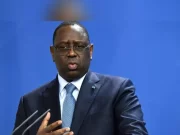
In his speech, the Prime Minister remained in the shadow of President Sall who was firm on the intentions of the State to put an end to the carnage on the roads: « Thus, road accidents cause deep suffering to the victims, their families and loved ones. Beyond the heavy human toll, road violence is a real social and economic scourge. They fuel poverty and slow our march towards emergence. The economic cost of road safety in our country is now estimated at 160 billion francs, or 2% of GDP. » He added: « Public authorities must prevent and crack down on irresponsible individual behaviour. Speeding, alcohol and drugs while driving, as we know, are major risk factors that aggravate accidents. They are not tolerable. A change in behaviour is essential. It requires training, and even education from an early age.
It also requires the establishment of an effective control and sanction policy, guaranteeing compliance with clearly defined rules. Prevention and punishment will therefore be two totally complementary aspects of government action. » Without any doubts, these are not the only measures taken. As the discussions dragged on in the evening following a 3-hour late start. It was 7:25 p.m. when the debates began before ending in an interminable closed session.
By Alioune Badara NDIAYE / abndiaye@lequotidien.sn