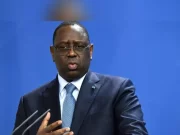

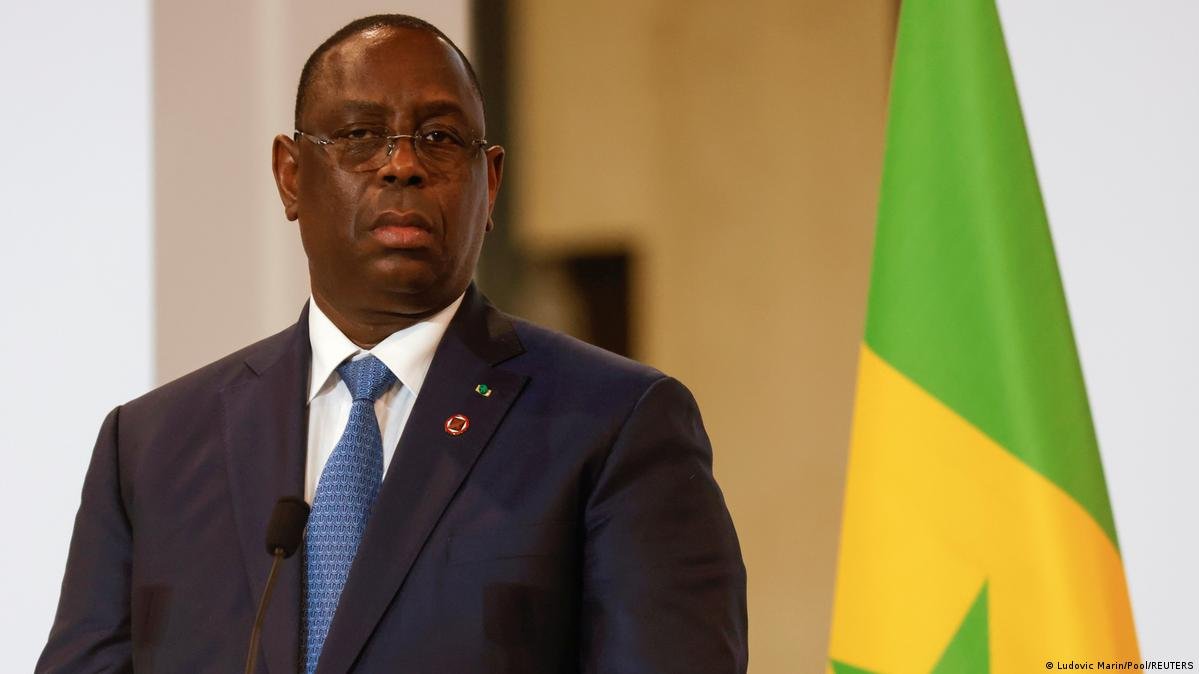
The current president of the AU since February 2022, Macky Sall has just completed his term at the head of this organisation. The Senegalese leader’s term was marked by negotiations for the release of blocked grain stocks in Ukraine, advocacy for massive investment in agriculture, and the AU‘s membership of the G20, among others.
He dreamed of it and took his mandate very seriously. This has led him to put back into the institutional architecture thePrime Minister Office, which was abolished after his triumphant re-election to the Presidency in 2019. This February 15th should mark the end of the mandate for Macky Sall at the head of the African Union. The Senegalese head of State has been the current president of this organisation for a year and has carried the voice of Africa whenever necessary, travelling the world to do so.
The Senegalese leader, who took the reins of the AU in a context marked by the Ukrainian crisis, was able to show diplomacy for the supply of cereals, at a time when a food crisis threatened several countries on the continent because of this war. In meeting President Putin in Sochi, Mr Sall insisted on the consequences of this crisis in Africa. He managed to convince the Russian leader to release the grain stocks blocked in Ukraine. Each time he has taken part in meetings at the global level, in his capacity as the current president of the AU, Mr Sall has emphasised the efforts to be made by the continent to stop falling victim to exogenous shocks. This is part of the quest for food and health sovereignty. At the last G20 summit, for example, Macky Sall insisted on the spirit of solidarity that must guide, « actions to reallocate unused resources and a softening of their eligibility conditions « .
As Africa’s spokesperson, he also pleaded for the establishment of a global debt cancellation mechanism or, failing that, its suspension. A battle that has not yet been won.
Another issue that marked the Senegalese leader’s presidency at the head of the AU was his membership of the G20. This was a vigorous plea that won the support of countries such as the United States, Japan, Turkey, China and France. At the Bali Summit in Indonesia, held last November, Macky Sall expressed this wish. In his speech, President Sall said that Africa should no longer « be a permanent guest ». According to him, it is « unacceptable that the African continent, given the size of its population and its global economic weight, is absent from the forum where issues relating to global economic governance are discussed, even if, on an individual level, one country from the continent, South Africa, is part of the small circle of the twenty best-performing economies in the world ». It should be noted that President Sall also defended Africa’s candidacy for the UN Security Council. At the 77th session of the UN General Assembly, he called for a reform of international decision-making circles, including the Security Council, for a better representation of one billion four hundred million Africans.
In carrying out all these actions, Mr Sall wanted to promote a resilient Africa through peace, security, financing… In a continent marked by crises, Macky Sall had a lot to do with Guinea, Mali and Burkina. Indeed, coups d’état by colonels and lieutenant-colonels have followed one another in less than two years.
In Bamako, there was a putsch on 18 August 2020, a new fait accompli completing the first one on 24 May 2021, a putsch on 5 September 2021 in Conakry, a putsch on 24 January 2022 in Ouagadougou. Summits were held and mediations conducted for the return of civilians to power.
Mr. Sall‘s presidency was also marked by the quarrel between Côte d’Ivoire and Mali due to the arrest of 49 Ivorian soldiers in Bamako. As current chair of the African Union, Sall went to Mali on 15 August to negotiate the release of 49 Ivorian soldiers arrested at Bamako airport in July. The soldiers, imprisoned for « undermining state security », are accused by the Malian authorities of being « mercenaries ». The Ivorian presidency refutes this accusation, saying that the 49 soldiers were in Mali on a UN mission. Macky Sall, during his trip to Bamako, was received by Colonel Assimi Goïta, who said he was available for dialogue.
However, it should be noted that despite the mediation, the junta remained in its position, and the 46 soldiers (three women soldiers were released at the end of August for humanitarian reasons) were sentenced on 30 December by the Malian justice system to 20 years imprisonment for « crimes of attack and conspiracy against the government ». They were finally pardoned in January by President Assimi Goïta. Macky Sall‘s successor will be responsible for continuing these projects for the good of the continental organisation.
By Dieynaba KANE / dkane@lequotidien.sn